

Omics Intelligence for Health
Min Seo Kim Lab: Omics Intelligence for Health
We integrate human genetics, multi-omics, clinical data, and artificial intelligence to make personalized medicine the new standard of care.




Personalized medicine as the new standard of care
Cardiometabolic diseases remain the leading cause of death worldwide, yet most patients are still treated according to population averages rather than their own biology.
Our group builds the evidence and the tools to change this. We combine large-scale human genetics with proteomic, metabolomic, and clinical data, and we use machine learning and AI agents to turn these data into decisions: who is at risk, which mechanism drives their disease, and which treatment will work for them.
The Omics Intelligence for Health Lab sits within the Cardiovascular Research Center at Massachusetts General Hospital, the Mass General Brigham Heart and Vascular Institute, Harvard Medical School, and the Broad Institute of MIT and Harvard, an ecosystem that connects discovery science directly to patient care.
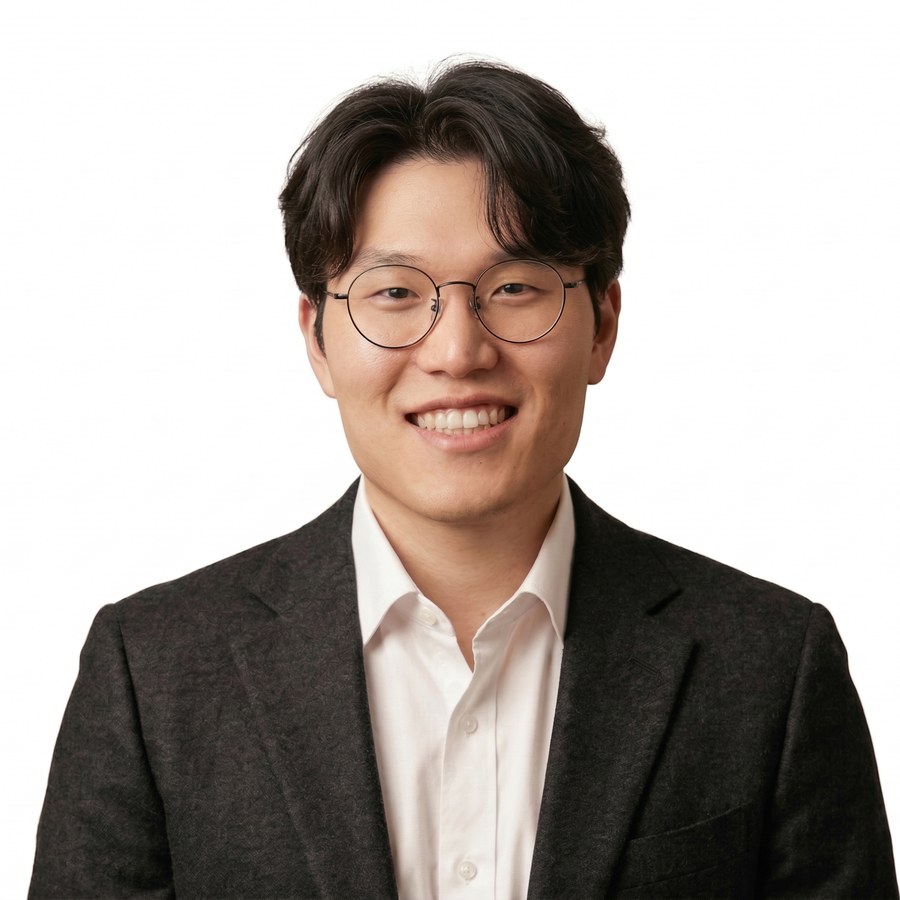
Min Seo Kim, MD, MS
Faculty member at Massachusetts General Hospital and the MGB Heart and Vascular Institute, with incoming appointments as Assistant Professor at Harvard Medical School and Associate Member at the Broad Institute of MIT and Harvard
Dr. Kim is a physician-scientist whose research integrates human genetics and AI to improve the prediction, prevention, and treatment of cardiometabolic conditions with a particular focus on obesity, biological aging, and cardiovascular-kidney-metabolic syndrome. His training spans medicine, public health, statistical genetics, and computational biology. He earned his MD from Korea University College of Medicine and an MS in digital health and computational genomics from the Samsung Advanced Institute for Health Sciences and Technology (SAIHST). He then completed postdoctoral training at the Broad Institute of MIT and Harvard. Before moving to Boston, he served as a primary care physician at public medical centers and as a public health official at the Korean Ministry of Health and Welfare. He is committed to making personalized medicine the new standard of care by turning omics data into decisions that reach both patients and populations.
Research programs
Mechanistic clinical trials
Omics-augmented trials run within MGH and Harvard-affiliated hospitals, designed to reveal not only whether a treatment works but how.
Learn more → 02Medical AI development and validation
We build medical AI models and test them prospectively in MGH clinical workflows to establish whether they improve patient outcomes.
Learn more → 03Agentic biology
AI agents for scientific discovery, with several studies underway in partnership with Google DeepMind and other collaborators.
Learn more → 04Drug development
Target discovery with whole genome sequencing, machine learning, and biological digital twins, validated with experimental collaborators.
Learn more → 05Clinical informatics
Genetics and omics brought into EHR, laboratory, and imaging data to personalize risk prediction, diagnosis, and treatment.
Learn more → 06Precision public health
Population genetics made part of how public health works, in close collaboration with the Global Burden of Disease study.
Learn more →Featured publications
Main-authored papers. Bold marks the principal investigator. * equal contribution (co-first author). † co-corresponding or co-senior author.
- 2026Nature Metabolism In revision
Preprint available on medRxiv.
- 2026
- 2026
- 2026
- 2026Nature Communications
- 2026Burden of ischemic heart disease attributable to suboptimal diet in 204 countries and territoriesNature Medicine
- 2025
- 2025Circulation: Genomic and Precision Medicine
Covered by UK Biobank research stories.
- 2024
- 2023
- 2021European Heart Journal
Accompanied by an editorial in the European Heart Journal.
- 2026State-level burden of cardiovascular diseases in the US, 1990-2023Journal of the American College of Cardiology In revision
- 2026National and state-level burden of 32 cancer types in the United States, 1990-2023: a Global Burden of Disease Study 2023Cancer Cell In revision
- 2026The macroeconomic burden of atherosclerotic cardiovascular disease in 204 countries and territories, and projections to 2050: a global modelling studyNature Communications In revision
- 2026Burden of cardiovascular diseases in sub-Saharan Africa, 1990-2023: a Global Burden of Disease Study 2023Nature Health In revision
- 2026Health burden attributable to non-diabetic elevated fasting plasma glucose in the USA, 1990-2023, with forecasts to 2050Nature Health In revision
- 2026Global, regional, and national burden of respiratory infections, 1990-2023: a Global Burden of Disease Study 2023Nature Medicine In revision
- 2026
- 2026A clinical benchmark for evaluating individual level accuracy of coronary disease polygenic risk scoresNature Communications In press
- 2026
- 2026Journal of the American College of Cardiology
- 2026
- 2026
- 2026
- 2026The Lancet Respiratory Medicine
- 2026
- 2026
- 2025
- 2025Journal of the American Academy of Dermatology
- 2025
- 2025
- 2025
- 2024
- 2024Annals of Internal Medicine
Covered by STAT News.
- 2024
- 2024
- 2023
- 2023BMJ Evidence-Based Medicine
- 2023
- 2023
- 2023
- 2021Clinical Gastroenterology and Hepatology
- 2020
- 2019
Lab news
The Omics Intelligence for Health Lab launches at Massachusetts General Hospital
Dr. Min Seo Kim joins the Cardiovascular Research Center at Massachusetts General Hospital and the Mass General Brigham Heart and Vascular Institute as Investigator, with an incoming appointment as Assistant Professor at Harvard Medical School and as Associate Member at the Broad Institute of MIT and Harvard. Read about our research →
We are recruiting
Positions are open for postdoctoral fellows, graduate students, research assistants, and visiting scholars in human genetics, multi-omics, clinical informatics, and AI for biology. Open positions →
Mapping drivers of life expectancy change in Asia published in Nature
A Global Burden of Disease analysis, co-led by Dr. Kim, decomposes three decades of life expectancy change across Asia into its underlying causes and risk factors. Read the paper →
We are recruiting
If you are a student, a prospective postdoctoral fellow, or a collaborator who shares our goal of making personalized medicine the standard of care, we would like to hear from you.